


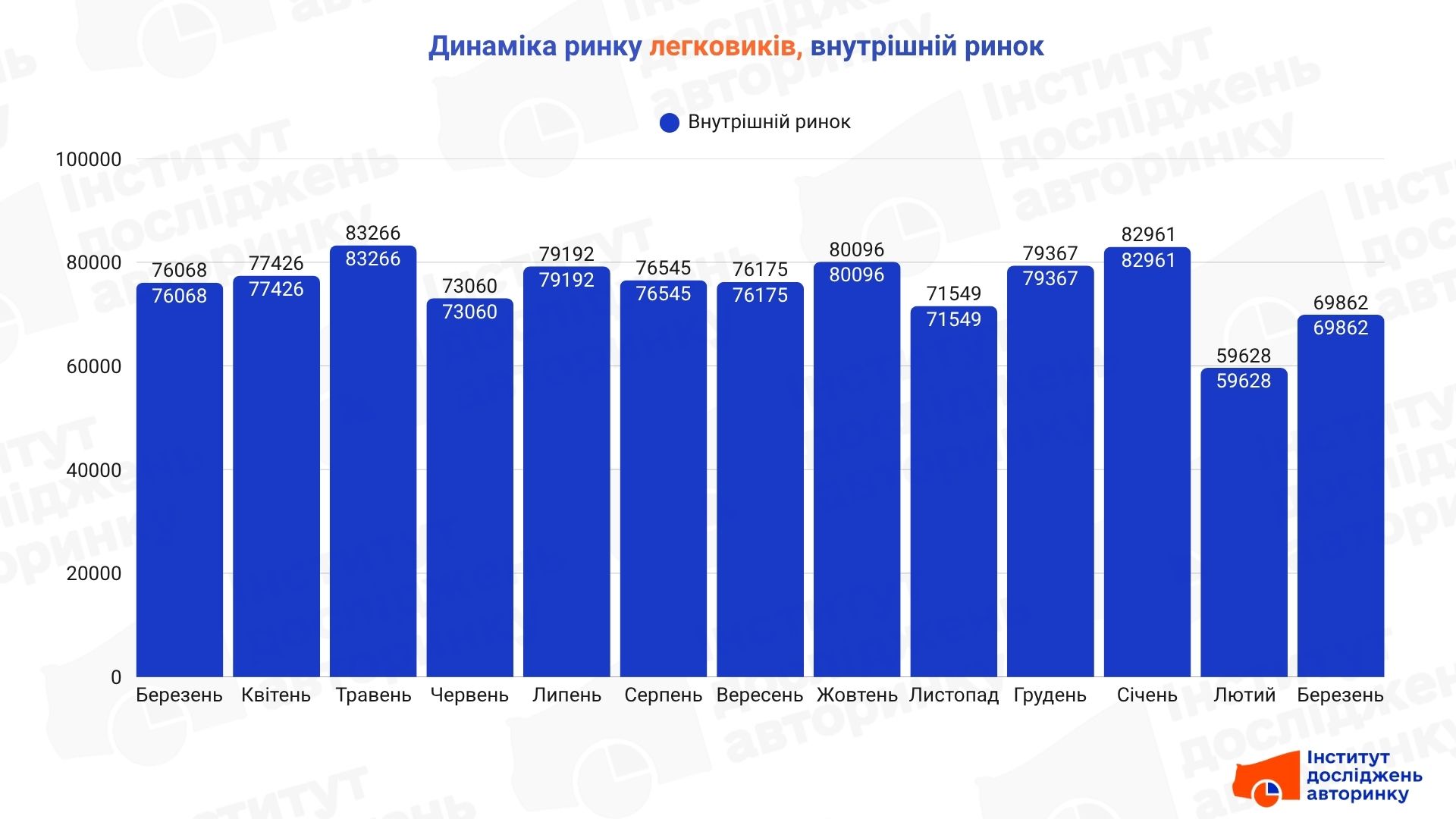
March 2026 was a period of significant revival in the domestic used car market. The total number of recorded purchase and sale transactions amounted to 69,862 units. This indicates a strong seasonal surge — buyer activity increased by 17.2% compared to February. Despite the fact that the market decreased by 8.2% compared to March last year, the current dynamics indicate a revival of interest in changing vehicles after the winter period.
- Buying a car? Check its history by VIN code on CEBIA !
Domestic resales remain the main foundation of the Ukrainian car market, providing the main volume of registration actions. The March growth confirms that used cars within the country remain the most accessible and popular way to solve logistical problems for the majority of citizens.
Brands: the German "monolith" and the retreat of the past
In the ranking of preferences of Ukrainians in the domestic market, unwavering loyalty to the German auto industry remains. The Wolfsburg brand traditionally leads the list by a huge margin, remaining the main choice for both rational family buyers and businesses. French and Czech brands continue to hold high positions, offering balanced solutions in the middle price segment.
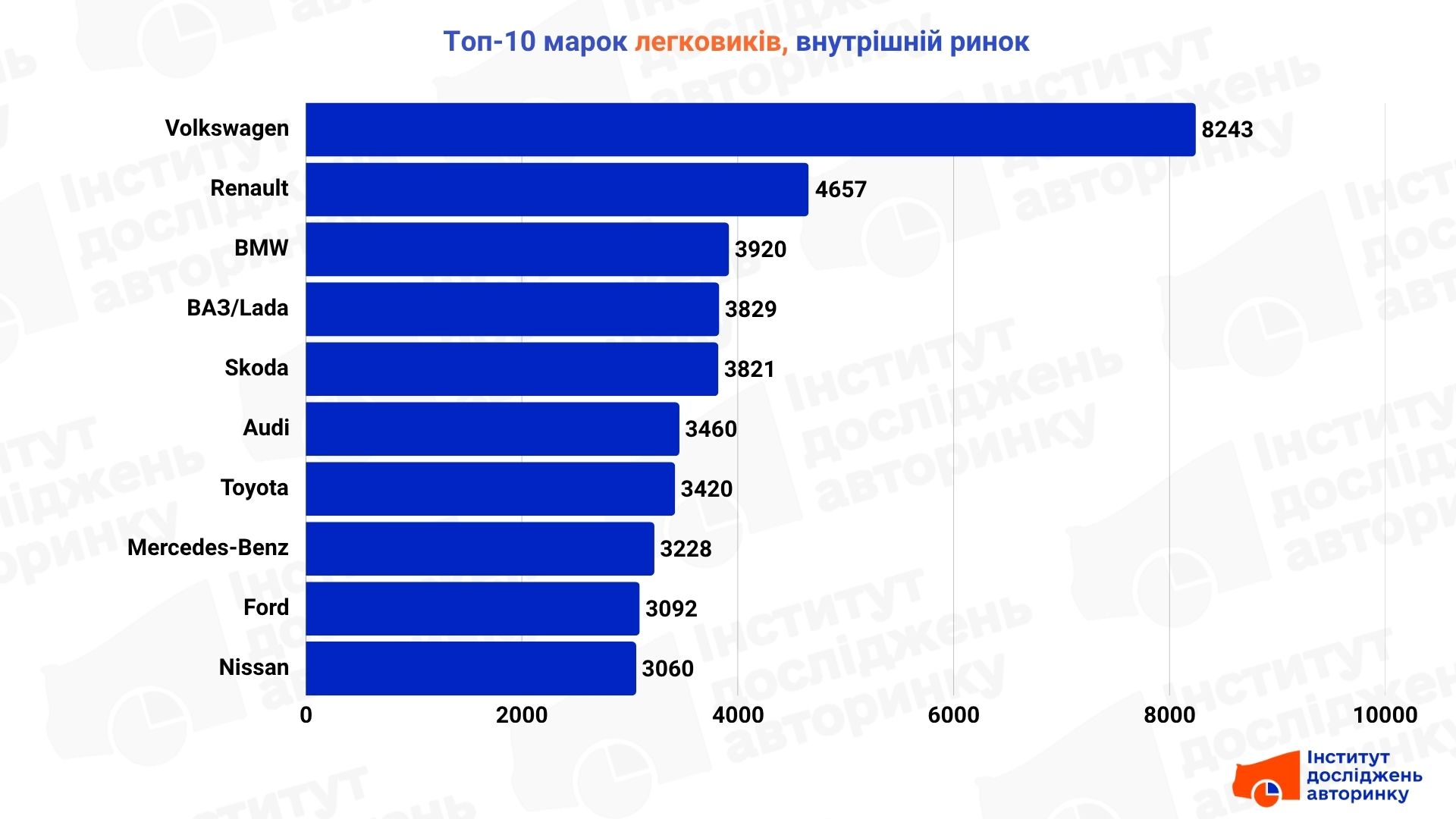
An interesting trend in March was the strengthening of the positions of premium German brands, which are increasingly confidently displacing representatives of the budget sector of past decades. Although the products of the former Soviet and post-Soviet auto industry are still present in the top ten, their share is gradually eroding. The Ukrainian consumer is increasingly choosing used cars of Western origin, preferring comfort and safety, even when it comes to cars with solid mileage. Japanese and American manufacturers close the top ten, demonstrating stable demand for reliable sedans and crossovers.
Models: Passat out of competition and unchanged Lanos
In the model ranking, March did not bring revolutions, but consolidated the existing statuses. The most popular car in the domestic market remains the German business sedan, which has become a true symbol of reliability for Ukrainians. Its positions are so strong that the closest pursuer — the Czech liftback — is hundreds of deals behind. The third place is confidently held by the classic German hatchback, forming the top three, which has not undergone significant changes for years.
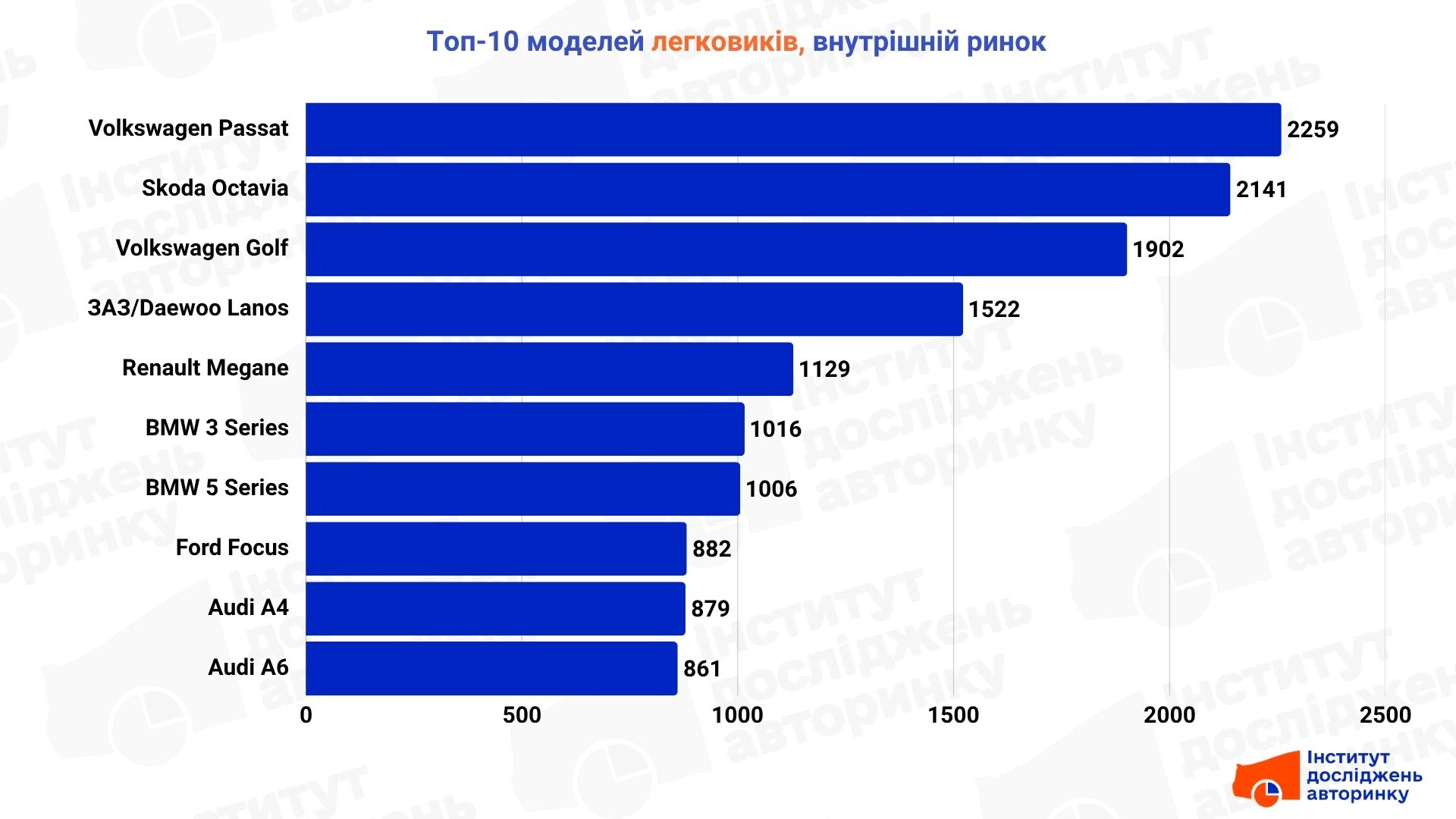
At the same time, the legend of Ukrainian roads is still firmly in the ranking — the peopleʼs car of local production, which, despite its age, remains an entry ticket to the world of motorists for many Ukrainians. The remaining positions in the top ten are distributed between popular French station wagons, American city cars and representatives of the premium class, among which driver sedans of Bavarian origin are especially popular. The domestic market of models in March is a combination of time-tested "workhorses" and increasingly affordable premium.
Luxury segment
March turned out to be unexpectedly generous in terms of resale of top-of-the-line cars. The domestic market demonstrated that luxury cars in Ukraine do not just sit idle in garages, but actively change owners. Porsche deserves special mention — the real record holder of the month among elite brands: 253 cars of this brand changed owners.
However, the real exotic is hidden in individual transactions. Last month, the domestic market recorded the resale of one Ferrari and one Lamborghini. In addition to Italian supercars, two Aston Martins and three Bentleys found new owners. The special status of the March auctions is emphasized by six Rolls-Royces and ten Maserati. Such a concentration of ultra-luxury indicates high activity in the premium sector, where even in difficult times the demand for exclusivity remains.
Distribution by fuel
The market structure by fuel type underwent important transformations in March. Gasoline cars remain the most popular, holding over 42% of the market. However, the main sensation is in the electric vehicle segment. Their share in the domestic market immediately increased by 3.1%, reaching 6.5%. This is the highest growth rate among all types of power plants. Skepticism about electricity is melting en masse: when gas (LPG) costs 47 UAH, and gasoline confidently holds at 72 UAH, and diesel — 86 UAH/l, the arguments "against" the socket are running out. Todayʼs resale structure is not so much about ecology, but about the survival of the budget of the average car owner
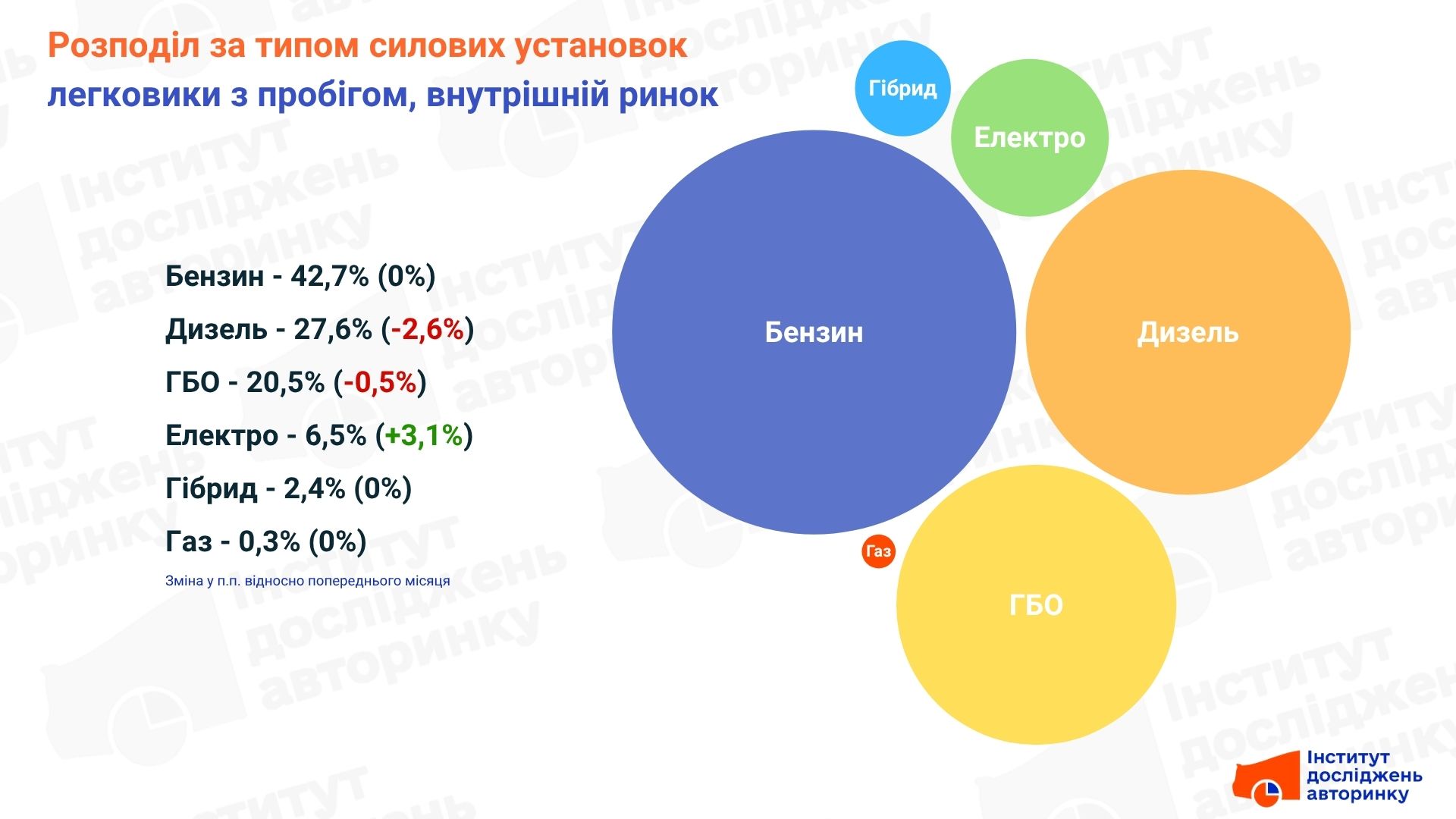
Accordingly, diesel engines are losing ground: their share has decreased by 2.6%. A small drop was also recorded in the segment of cars with LPG. Hybrids and other types of fuel remain stable. It seems that high fuel prices and the development of charging infrastructure are forcing Ukrainians to reconsider their priorities in favor of electricity even when choosing a used car within the country.
Brief conclusion
March demonstrated that the domestic market is alive and capable of significant acceleration. The main drivers are the transition to electric vehicles, a stable love for German classics, and relatively high activity in the luxury segment.
- Need more data — order it from IDA!


