


The LCV (light commercial vehicle) market in 2025 became a mirror of the state of small and medium-sized businesses. While some segments showed deep stagnation, others "squeezed" results thanks to the New Yearʼs excitement and logistical challenges.
- Check the history of a car by VIN code before buying using the CEBIA service!
2025 Results: Commercial Lull and December Sprint
The overall figures for the year look mixed. In the domestic resale segment, 24,560 transactions were recorded, which is a significant 51.9% less than in 2024. In contrast, imports of used vehicles showed viability: 12,511 units, which is 18% more than in the previous year. The new car market “sagged” a little — 5,898 registrations ( -9.9% ).
However, December decided to correct the situation. Domestic resales increased to 2,289 units ( +3.9% MM ), which in annual terms ( YY ) is a cosmic +105.3%. Imports of used cars added 15.4% per month ( 1,216 units), showing a growth of 74% compared to December last year. The new car segment also “tightened up”: 606 cars, of which 537 were net imports ( +28.5% MM ), and 69 were Ukrainian-made vehicles (large-unit assembly and special bodies), which is 25.5% more than in November, although compared to last December this is a drop of 25.8%.
Here are the dynamics by subsegments of the LCV market in December:
- Domestic resales: +3.9% MM, +105.3% YY
- Used imports: +15.4% MM, +74.0% YY
- New imports: +28.5% MM, −0.7% YY
- Made in Ukraine: +25.5% MM, −25.8% YY
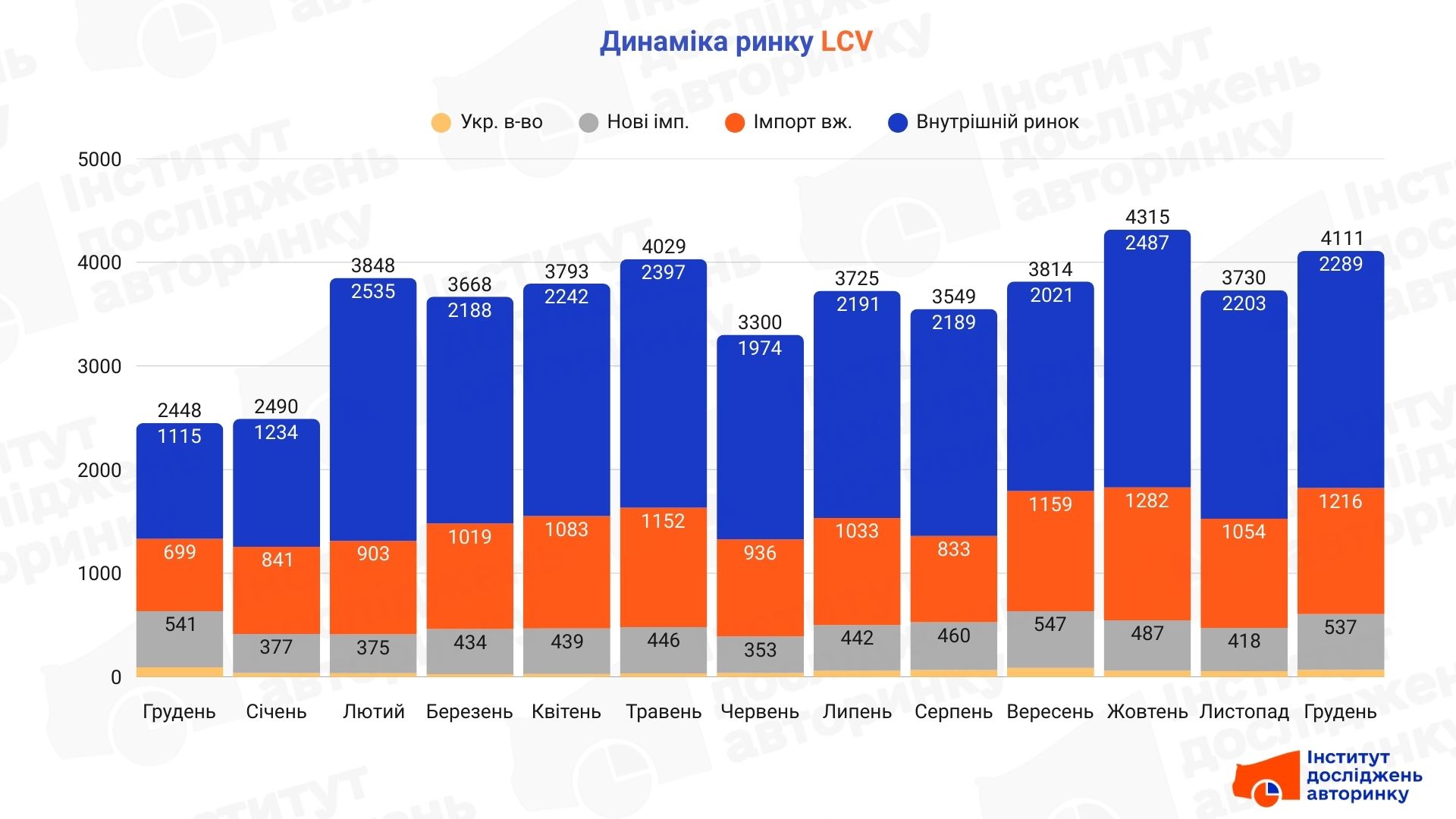
LCV — domestic market
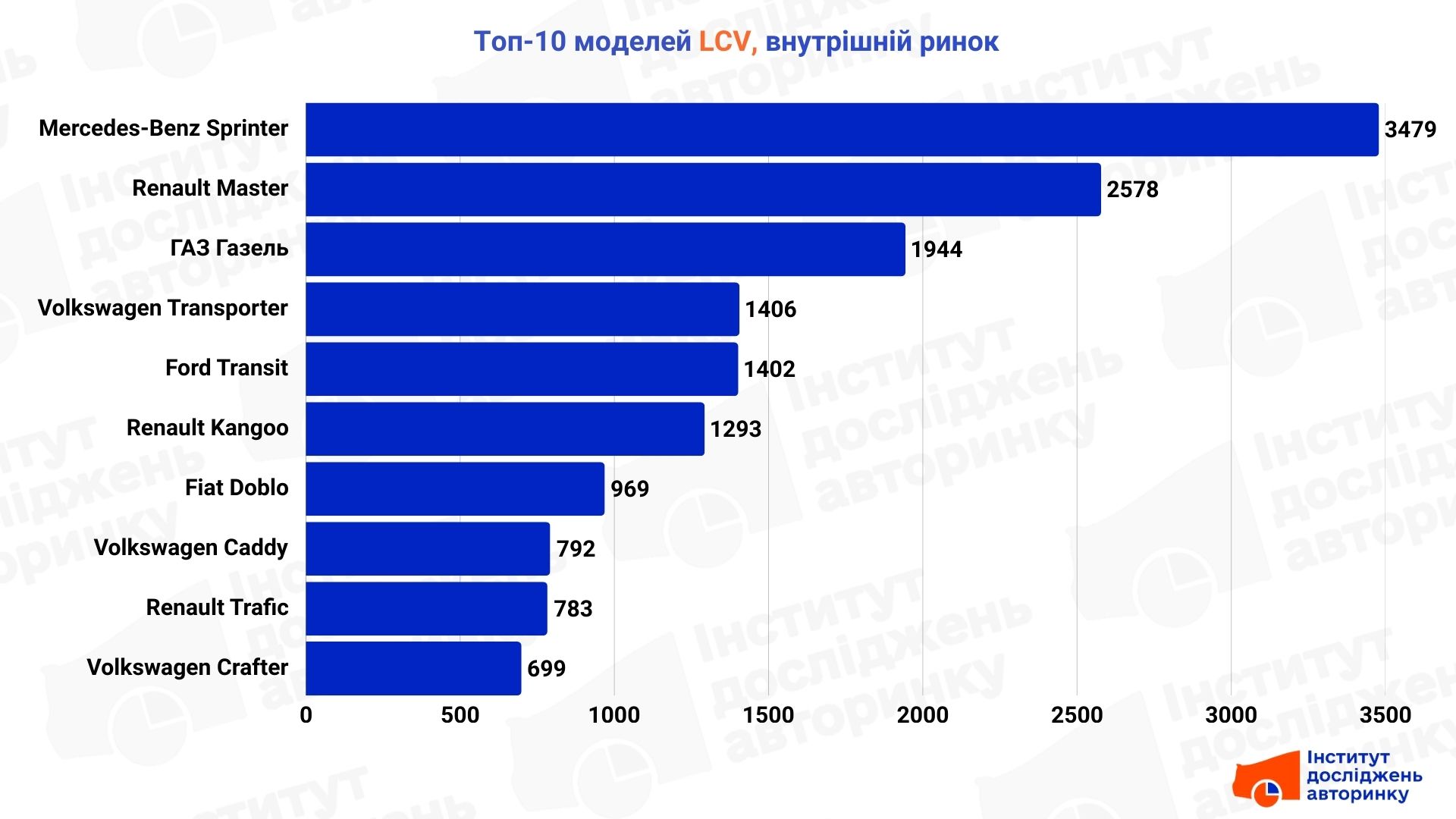
In the secondary market of Ukraine, the main types remain vans, pickups and cargo-passenger versions. The leader of sympathy is undoubtedly the Mercedes-Benz Sprinter, which remains the “gold standard” for carriers. Its main competitor, Renault Master, confidently occupies the second place. Third place is behind the “ghost of the past” GAZ Gazelle, which is still massively circulating within the country due to the low entry price.
Next on the list are German and American bestsellers: Volkswagen Transporter and Ford Transit. The compact segment is represented by Renault Kangoo, Fiat Doblo and Volkswagen Caddy. The top ten most popular used commercial vehicles in the country are Renault Trafic and the heavy-duty Volkswagen Crafter.
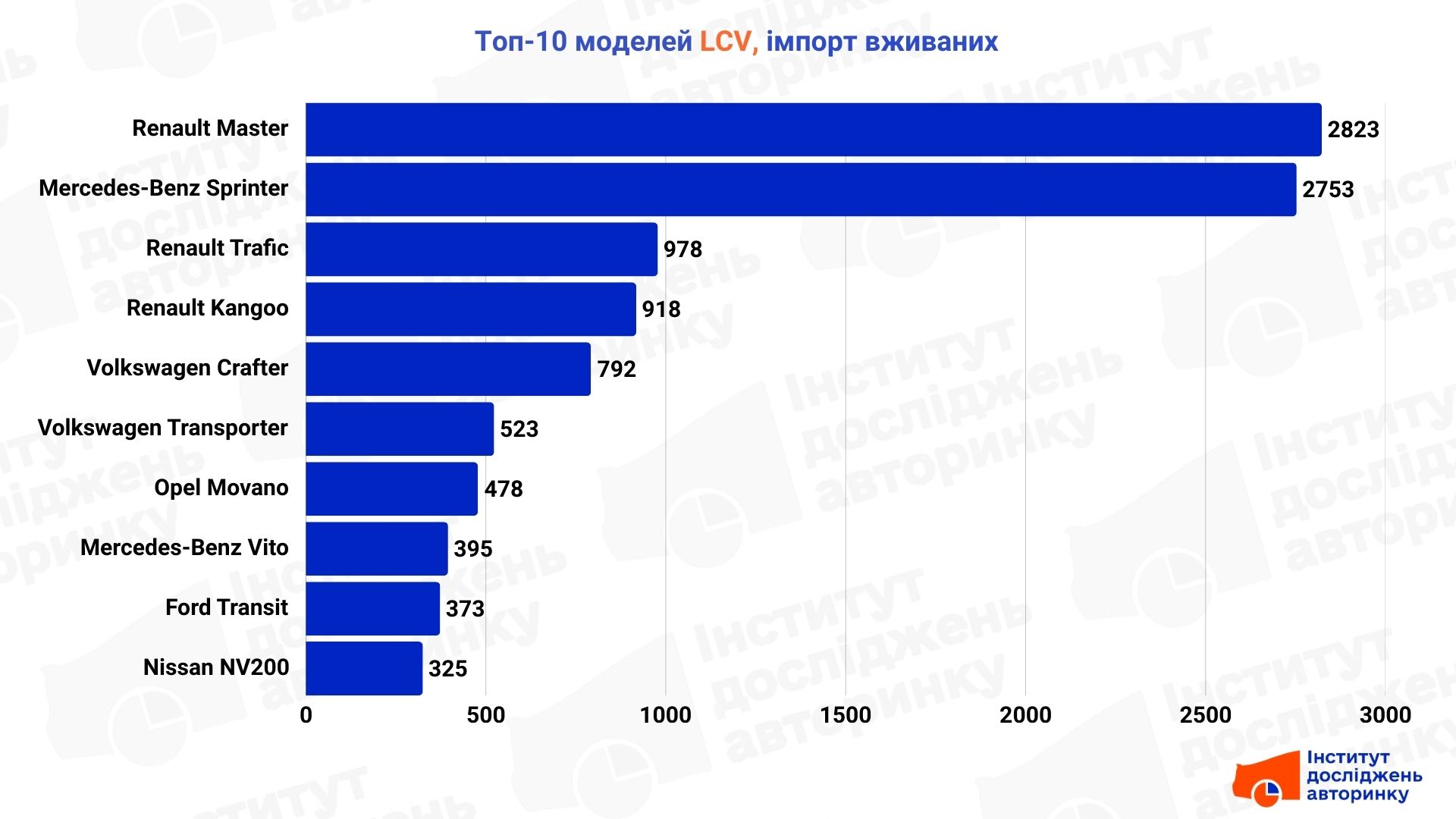
LCV — used import
When it comes to bringing cars from abroad, the business becomes as pragmatic as possible. The most popular types here are vans (especially refrigerated ones) and flatbed versions with an awning. In this segment, the Renault Master managed to overtake the Mercedes-Benz Sprinter, becoming number one for fresh imports.
Renault Trafic and Renault Kangoo also occupy a significant market share, which confirms the trust of Ukrainians in the French commercial line. Among other popular models that came from Europe, it is worth noting the Volkswagen Crafter and Transporter, Opel Movano, compact Mercedes-Benz Vito, as well as Ford Transit and the Japanese baby Nissan NV200.
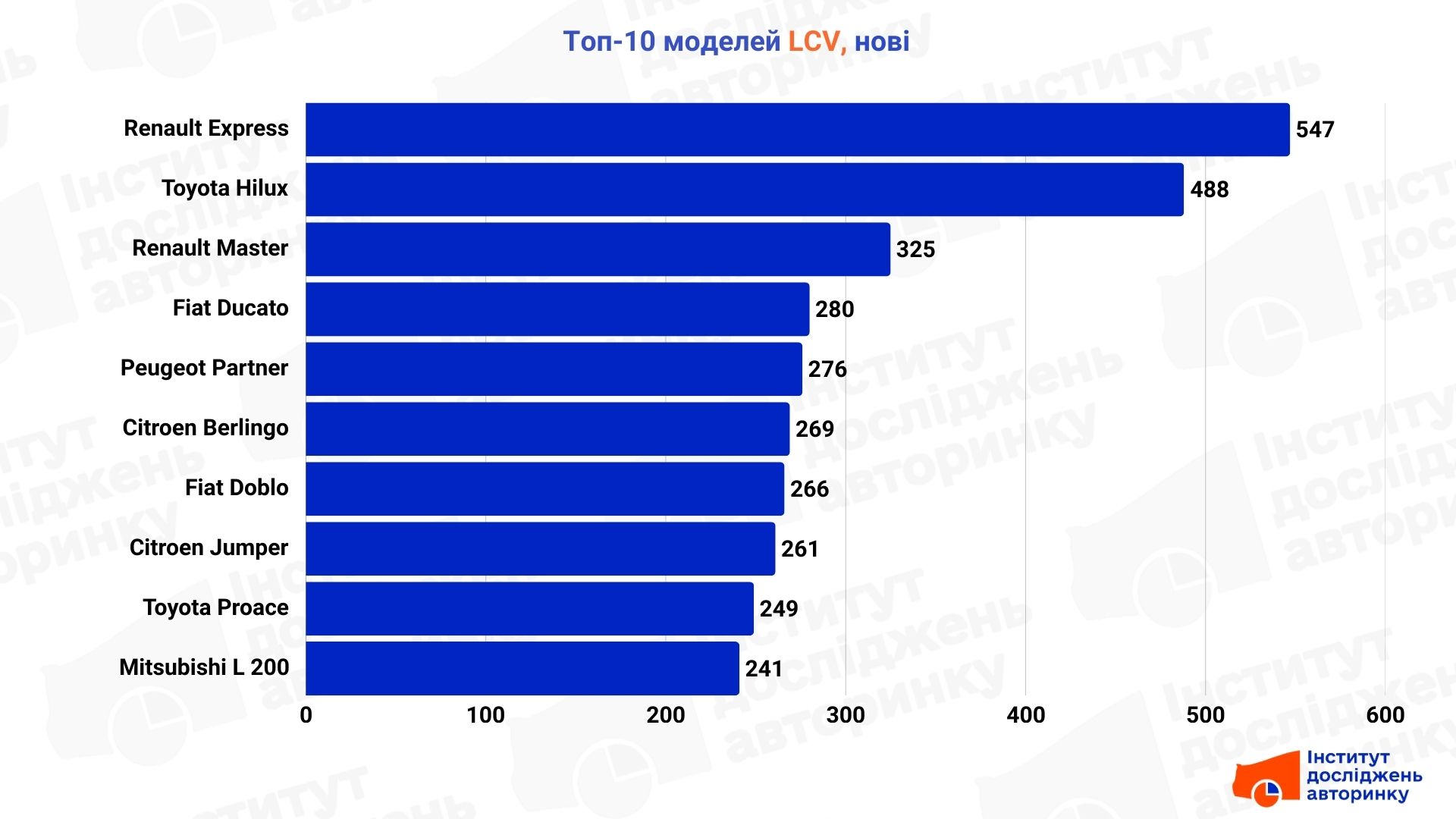
LCV — new sales
The new equipment market shows a completely different picture. Here, businesses and government agencies choose vans, pickups and refrigerators. The absolute leader is the compact Renault Express — an ideal solution for urban logistics. The second place is taken by the legendary Toyota Hilux pickup, which has become indispensable in difficult operating conditions.
The top three is rounded off by the large Renault Master. The top also included the Italian Fiat Ducato and a group of "heels": Peugeot Partner, Citroen Berlingo and Fiat Doblo. In addition, there was demand for the Citroen Jumper, Toyota Proace and another powerful pickup truck — the Mitsubishi L 200.
Expert opinion
Stanislav Buchatsky, co-founder of the Institute for Car Market Research:
"The LCV market in 2025 has clearly divided. We see how the "secondary" has collapsed sharply in volumes over the year, but the December jump of over 100% indicates that the business has adapted and began to actively update the fleet at the end of the year. Priorities have shifted: instead of universal cars, highly specialized vans and refrigerators are being purchased.
It is interesting to observe the leadership of Renault Express among new cars — this is a sign that urban delivery and small service remain the most active sectors of the economy. And the high positions of Toyota Hilux and Mitsubishi L 200 remind us of the demand for reliability and cross-country ability. Business has stopped buying "just a car", now it buys the most effective tool for specific tasks.
Memories from the Garage
Auto expert Ostap Novytskyʼs column
While logistics companies compete for aerodynamics and van volume, in 2025 an absolute long-liver appeared on the market — the MZMA 401-422, assembled back in 1955. This is not just a van, it is a technical manifesto of an era when metal was in short supply and engineering thought was ruthless.
The people called this car "Pinocchio", and not because of the long nose, but because of the design. This is a unique "hybrid" of a wardrobe and a car: its front part is metal (from the 401st "Moskvich"), but the cargo compartment is made entirely of a wooden frame, sheathed with plywood. By the way, the roof here was also special — made of artificial leather.
The post-war economy of the time was in dire need of sheet metal, so instead of stamping presses, carpentry was used. The result was a commercial vehicle that, if broken down, could not only be repaired, but also glued or varnished for parquet.
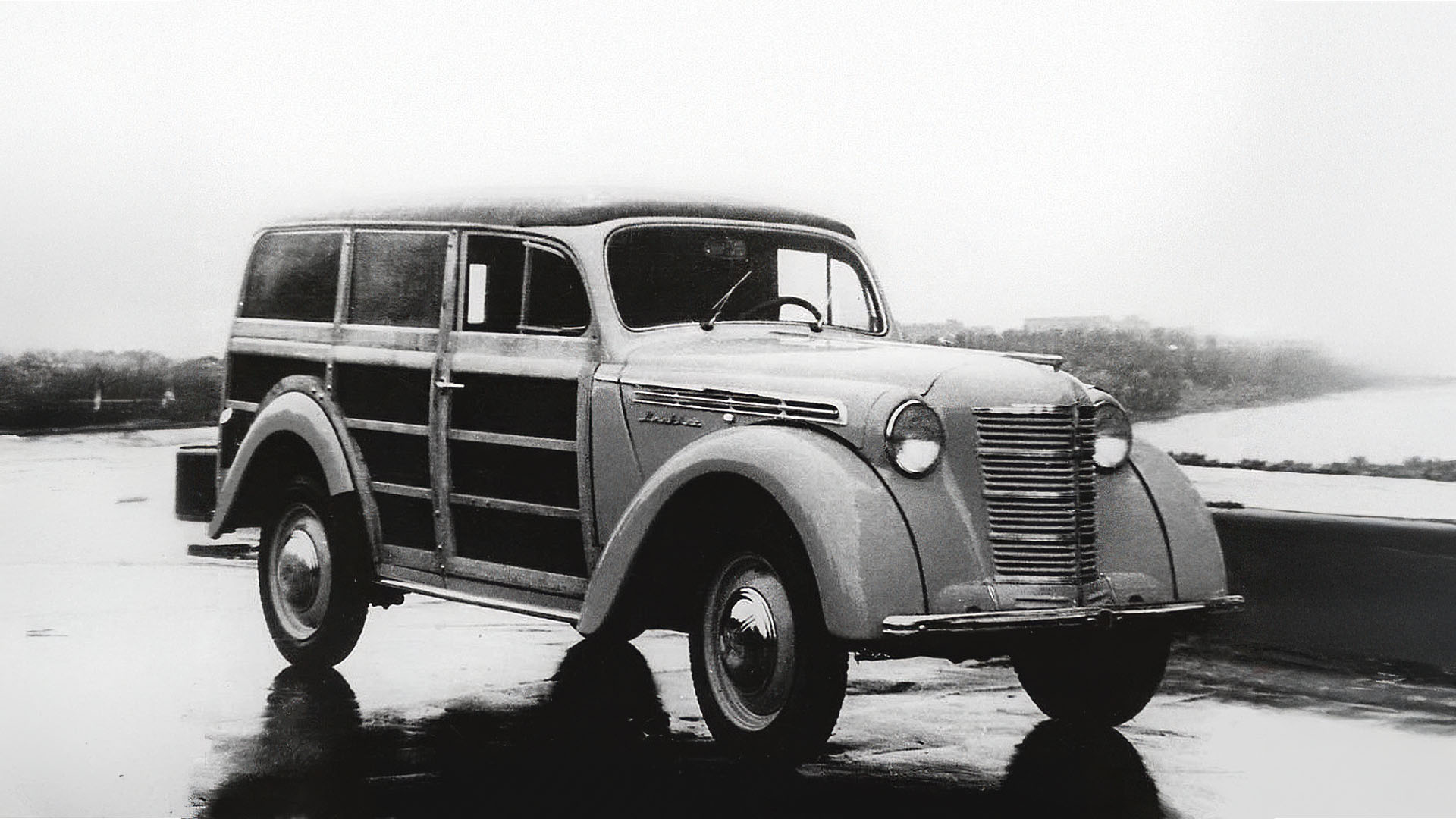
Such machines were frequent supporting actors in Soviet cinema of the 50s and 60s. They didn’t get the main roles, but they could often be seen in the background, delivering mail or fresh rolls. In the frame, they always looked touching — like little, busy mechanical ants.
While this wheeled cabinet was transporting bread, mail, and police officers, the world outside the USSR lived in a completely different reality. In Western Europe and the United States, LCVs were already becoming a separate class of vehicles with their own philosophy. The Volkswagen Type 2 transported business and surfers, the Citroën H-Van shaped the image of urban delivery, the Land Rover Series I worked in colonies and on farms, Fiat and Ford were preparing models that would later define logistics for decades to come. There, vans were metal, well-thought-out, with design, competition, and export.
MZMA 401-422 did not know this. The Iron Curtain was as deaf as his wooden door. He existed in a world without advertising, without a market, and without choice. His task was one — to travel and work.
Today, in 2025, this van looks like an ironic reminder of "environmental friendliness": while modern brands flaunt recyclable plastic, this grandpa proudly carries real wood. This is a true logistics low-cost: it has no air conditioning, power steering or ABS (its curb weight is only 855 kg), but it has a soul and, probably, the ability to attract termites.
The appearance of such a lot in the registers is the best evidence that our car market remembers everything. While some people are buying electric vans with touch screens, someone else is investing in a "wardrobe on wheels" that has already survived a dozen monetary reforms and several political regimes.
- Subscribe to the Telegram channel of the Auto Market Research Institute to receive information first, without advertising and spam.


