


Analysts at the Institute for Automotive Research (IAR) processed registration data for February 2026 to compile an up-to-date map of Ukrainian car market activity for passenger cars. The results of the study showed an interesting division: while digitalization is finally conquering the domestic market, physical activity in the aftermarket and new car segments continues to be concentrated around the western borders and the capital.
Domestic market
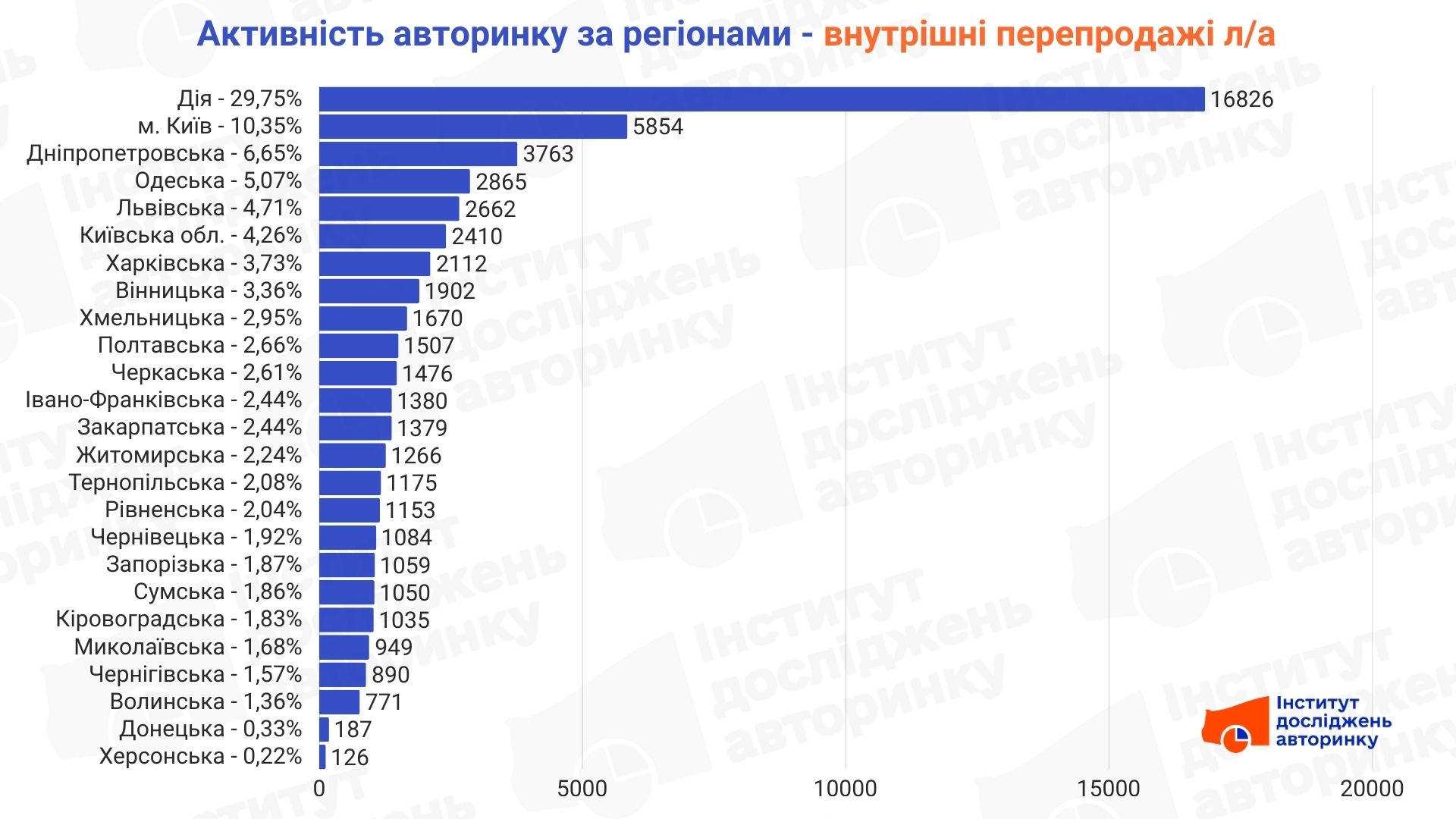
In the domestic market, we are witnessing a historic moment, where the largest “region” of the country has officially become Diya. Almost every third purchase and sale transaction in February took place online, which indicates the total advantage of convenience over traditional visits to service centers. Among physical regions, Kyiv is expectedly in the lead, followed by a group of large industrial and commercial centers: Dnipropetrovsk, Odesa and Lviv regions. This structure confirms that domestic car circulation remains most active in densely populated hubs, where there is a high concentration of the solvent population.
Import of used cars
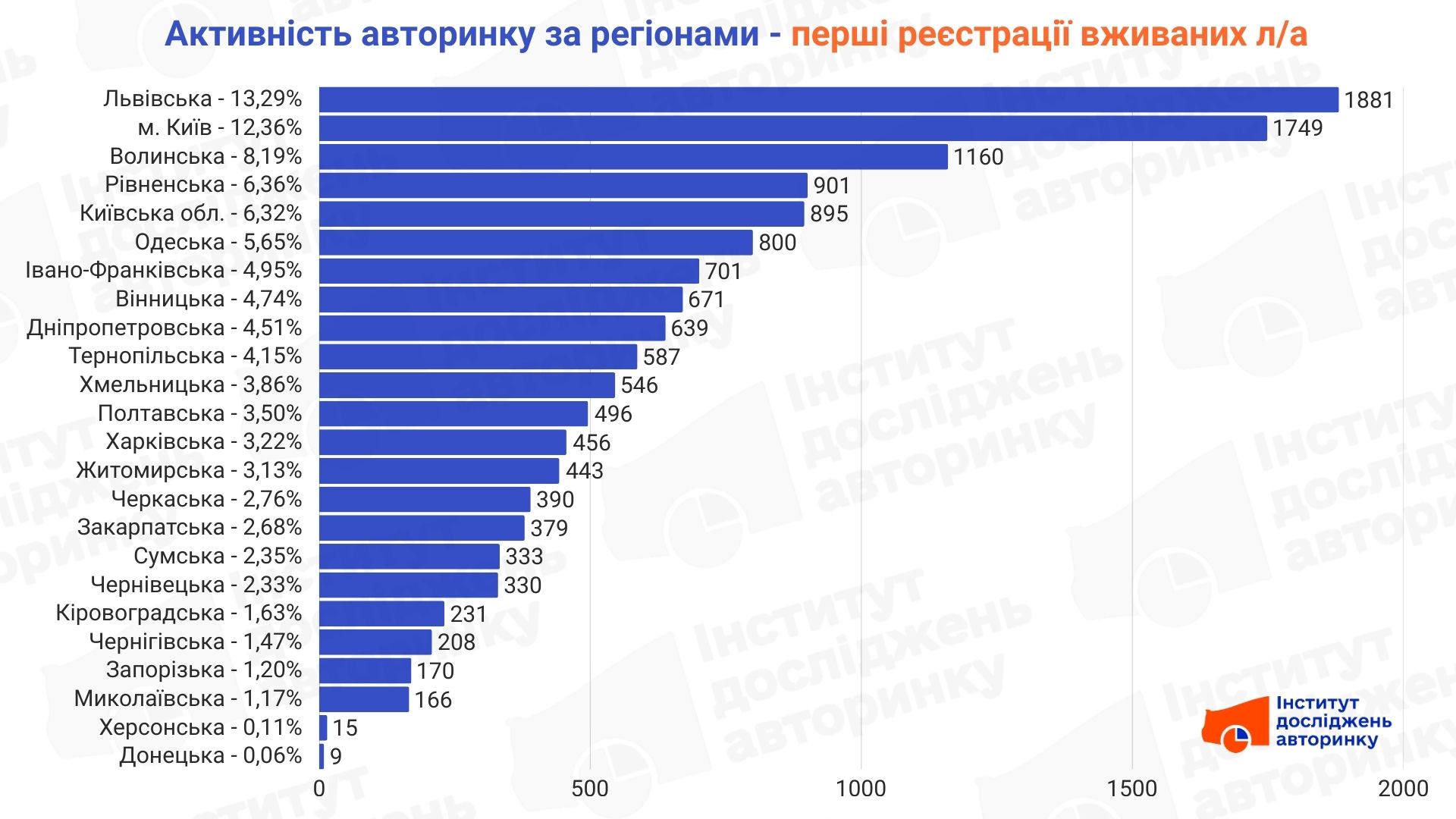
In the segment of used car imports, geography plays a decisive role, shifting the emphasis to the west of Ukraine. Lviv region confidently holds the lead, acting as the main "gateway" for cars from Europe. Kyiv ranks second as the main center of consumption of these imports.
- Check the history of a car by VIN code before buying with CEBIA!
Volyn and Rivne regions are also showing high activity, which together with Lviv region form a powerful western logistics cluster. This “western bias” is a logical consequence of the proximity to the border and the existing infrastructure for delivery and first registration of vehicles.
First registrations of new cars
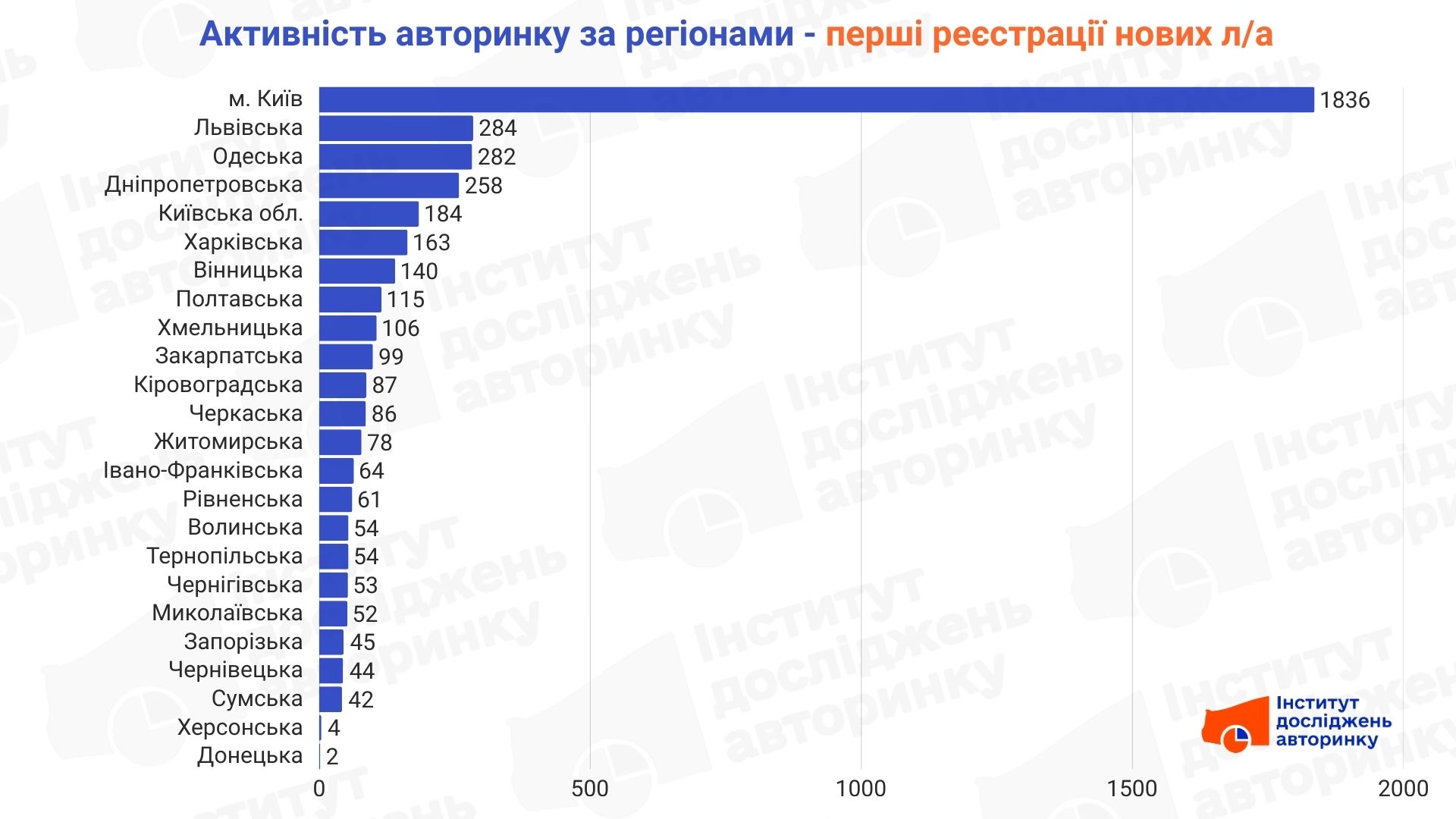
The new car market demonstrates the most radical centralization. Kyiv actually accumulates almost half of all sales in the country, which is explained not only by the high purchasing power of Kyiv residents, but also by the registration of large corporate fleets in the capital. Leasing companies and state-owned enterprises with offices in the capital also make their contribution. Lviv, Odesa and Dnipropetrovsk regions follow by a large margin, but they consistently maintain the status of regional leaders. In other parts of the country, new car sales remain at a much lower level, which emphasizes the deep gap in business activity between the capital and the regions.
February 2026 recorded three key forces shaping the Ukrainian car market: the digital revolution through Action on the domestic market, the logistical dominance of the West in imports, and Kyivʼs financial monopoly in the new car segment. The geography of the market is becoming increasingly distinct, with each segment having its own clearly defined center of gravity.
- Need more data — contact IDA!


