


Since 2019, conditions have been in place in Ukraine that were supposed to stimulate the development of eco-transport: electric vehicles were exempt from VAT and import duty. This exemption was valid until December 31, 2025. Market logic dictated that from January 1, 2026, after the 20% VAT was returned, prices should increase proportionally. However, in practice, in some situations, things worked out differently.
Statistics: the market has stopped
The indicators of the beginning of 2026 demonstrate catastrophic dynamics. If during 2024–2025, an average of about 6-7 thousand electric cars arrived in Ukraine every month, then the new rules of the game instantly collapsed the replenishment of the car fleet:
- January 2026: 2.3 thousand cars.
- February 2026: 0.9 thousand cars.
This drop exceeded even the most pessimistic analystsʼ forecasts by almost 8 times, taking into account "carried demand", that is, purchases planned for 2026, but made due to changes in import rules back in 2025.
Tesla case: how €6,900 turns into €18,000
One importer, on condition of anonymity, provided documents (and a photo of a car) illustrating a new customs "scheme" that significantly affects imports. His case is a typical example of how reality loses out to the figures from the customs database.
- Real price: Tesla Model 3 (2022) after an accident was bought at auction for €5,900. With all fees, the amount was €6,900. This is confirmed by the invoice, bank payment, and export declaration.
- Customs valuation: €18,000.
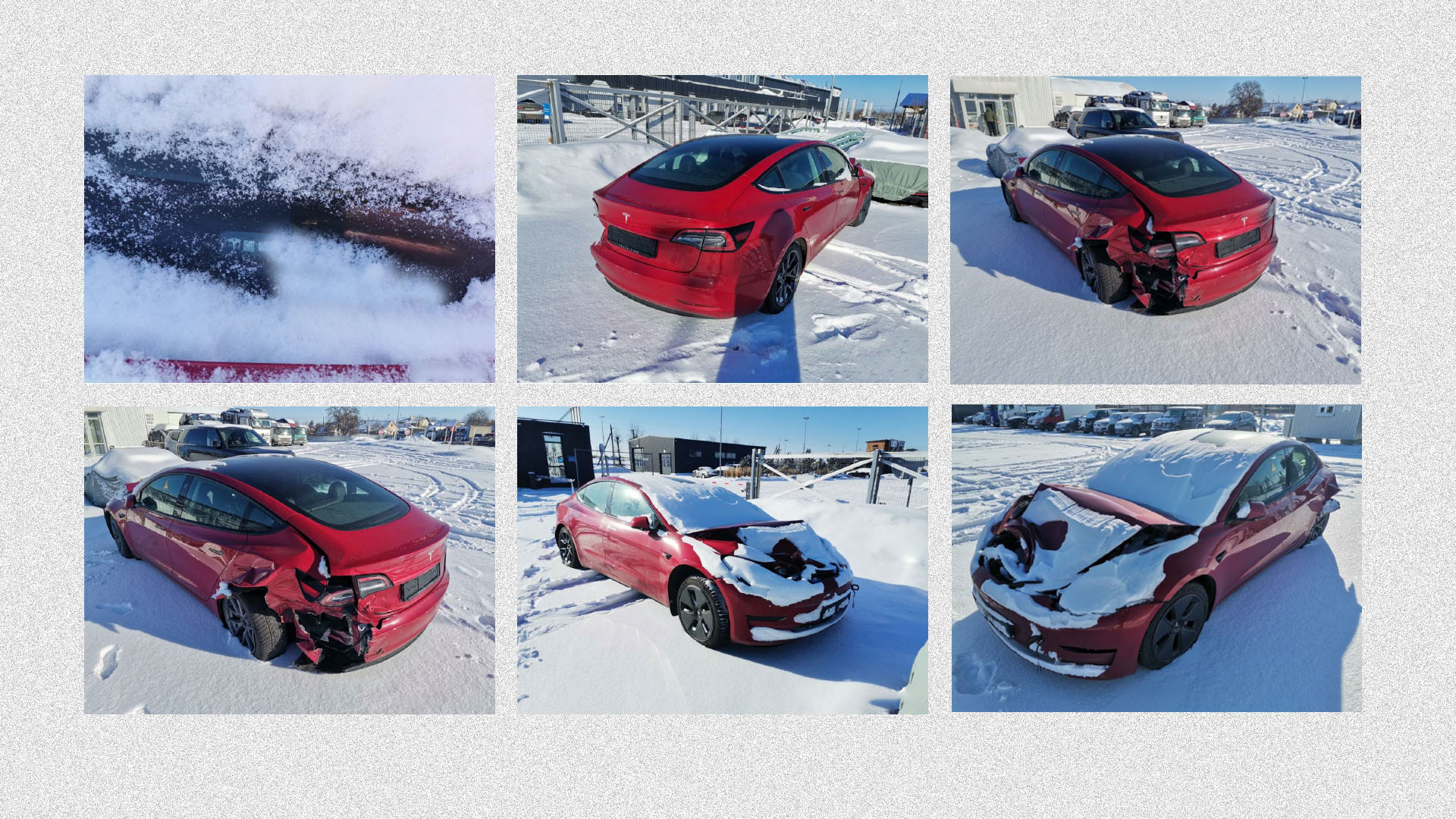
The customs officersʼ argument is simple: "There is a declaration in the database for August 2025, where a similar electric car was imported for 18 thousand." Why in 2025, when taxes were zero, did someone declare a car three times more expensive? Alternatively, this could have been a convenient way to legally withdraw currency abroad. Today, customs uses these "schematic" figures as a benchmark, forcing ordinary buyers to pay VAT on fictitious amounts.
Realities of the Ukrainian market
Considering that not everyone is immediately oriented towards prices for specific brands and models, we note that the average price for a 2022 Tesla Model 3 in Ukraine is 18.5 thousand euros. Less for cars with damage or incomplete, more for low-mileage options, without a previous accident, or sports Performance.
Therefore, an uncleared car purchased in its "raw" form at an auction (as such, incomplete and in need of repair) could not possibly cost as much as the average sellerʼs request for cars with Ukrainian documents, license plates, and running.
Digital Trap: Risks Actions
Today, great hopes are placed on customs clearance through Diya. However, this is where the main danger lies: if the service algorithm automatically pulls up data from the customs database, where incorrect numbers have been entered for years, we will get automation of injustice. Digitalization without an audit of customs catalogs will simply deprive a person of the opportunity to prove the real cost of a car, instantly issuing an inflated invoice.
What does this ultimately mean for everyone?
Only systemic reform or the return of customs officers to adequate assessment methods based on real documents, not on "phantom" records in databases, can correct the situation.
Otherwise, the used electric car segment in Ukraine will disappear as unprofitable. Importers will not be able to predict prices, citizens will refuse to buy, and the state will ultimately be left without the expected VAT revenues, because imports will simply cease.


