


Statistics compiled by specialists from the Institute for Automotive Research show that the classic concept of a "regional service center" is gradually giving way to virtual services. The distribution of activity in the three main segments of passenger cars shows a clear picture: the digitalization of resales, the capitalʼs struggle with the West for imports, and the absolute centralization of the new car market.
Acting as the countryʼs main "auto hub"
The most noticeable trend in the domestic market is the success of electronic services. The Diya application has actually become the number one “virtual domain”, accumulating almost 28.6% of all resales within the country ( 19,997 transactions ). This means that almost every third transaction in Ukraine is now concluded “on the go”, without being tied to the physical place of residence of the seller or buyer.
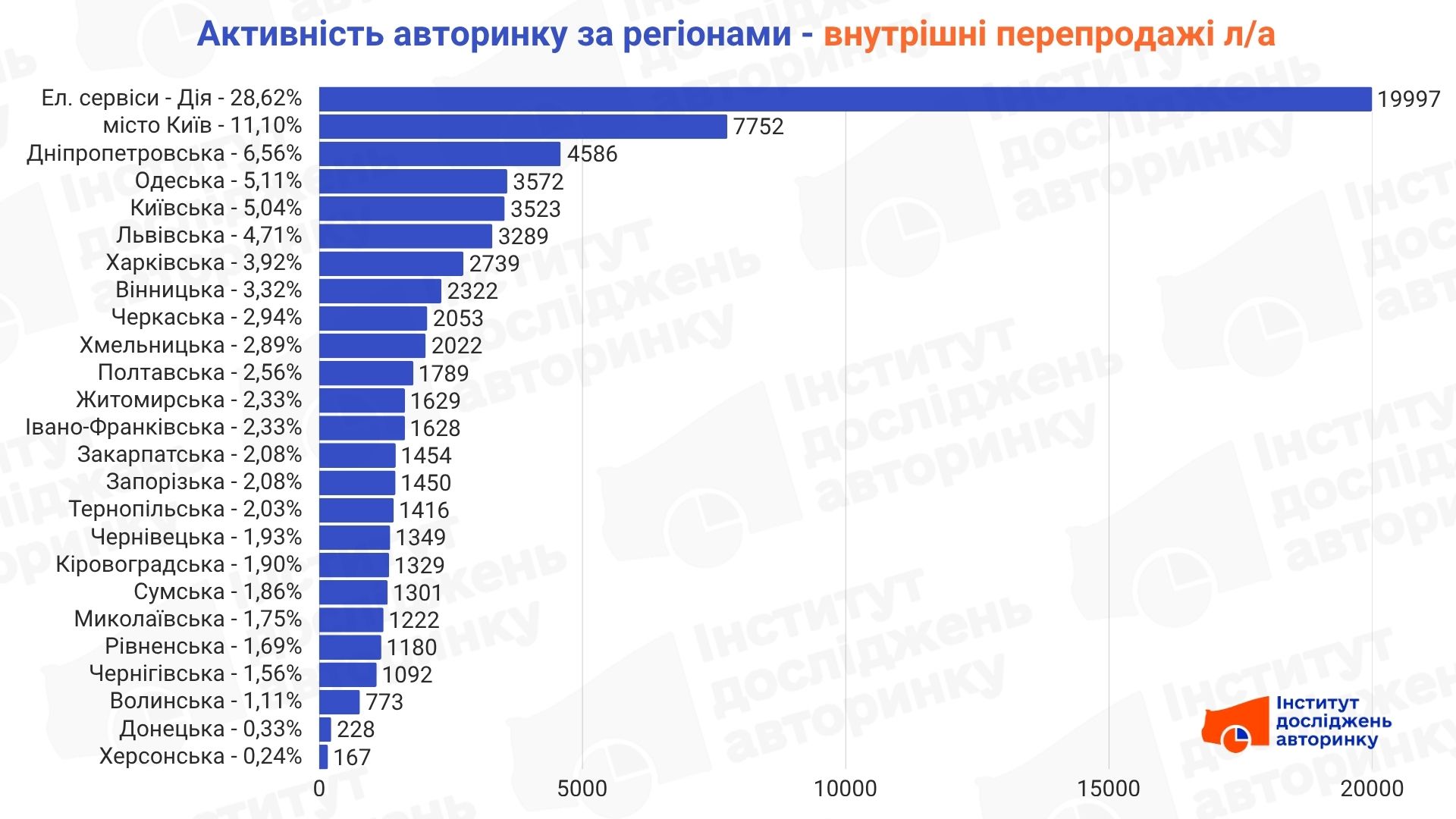
Among physical regions, the leader remains the city of Kyiv (11.1%), which, together with Dnipropetrovsk (6.6%) and Odessa (5.1%) regions, forms the top three most active offline locations. Interestingly, large industrial and port centers continue to maintain high resale volumes, despite the general trend of going digital.
Import of used equipment: Kyiv and Lviv
In the segment of used car imports from abroad, real parity was recorded in March between the capital and the “gateway to Europe.” Kyiv and Lviv region are very close, occupying 13.1% of the market each. This is logical: Lviv acts as the main hub for the import and first registration of vehicles, while Kyiv remains the main consumer market.
- Check the history of your car by VIN code using CEBIA!
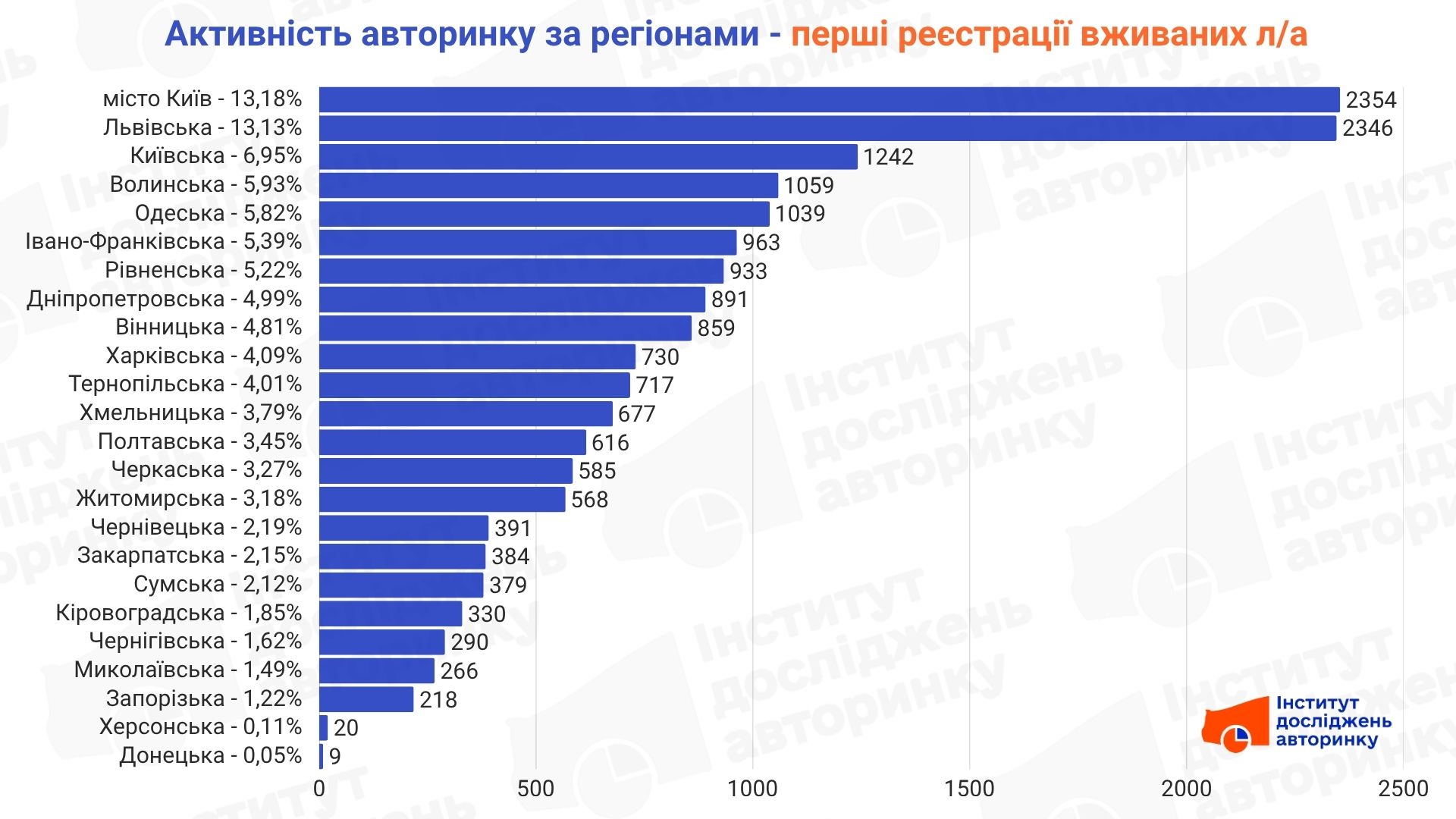
The Western region generally dominates imports: Volyn, Ivano-Frankivsk, and Rivne regions together account for over 16% of the used car market. This concentration is explained by proximity to the border and well-established logistics chains, which were operating at full capacity in March to meet the demand for "fresh" cars.
New car market: Kyiv is out of competition
While the domestic market and imports still have some degree of decentralization, the new car segment demonstrates absolute concentration of capital in the capital. Almost half (45.5%) of all new passenger cars in March received Kyiv registration. This is explained both by the higher purchasing power of the metropolisʼ residents and by the registration of large corporate fleets, whose headquarters are traditionally located in Kyiv.
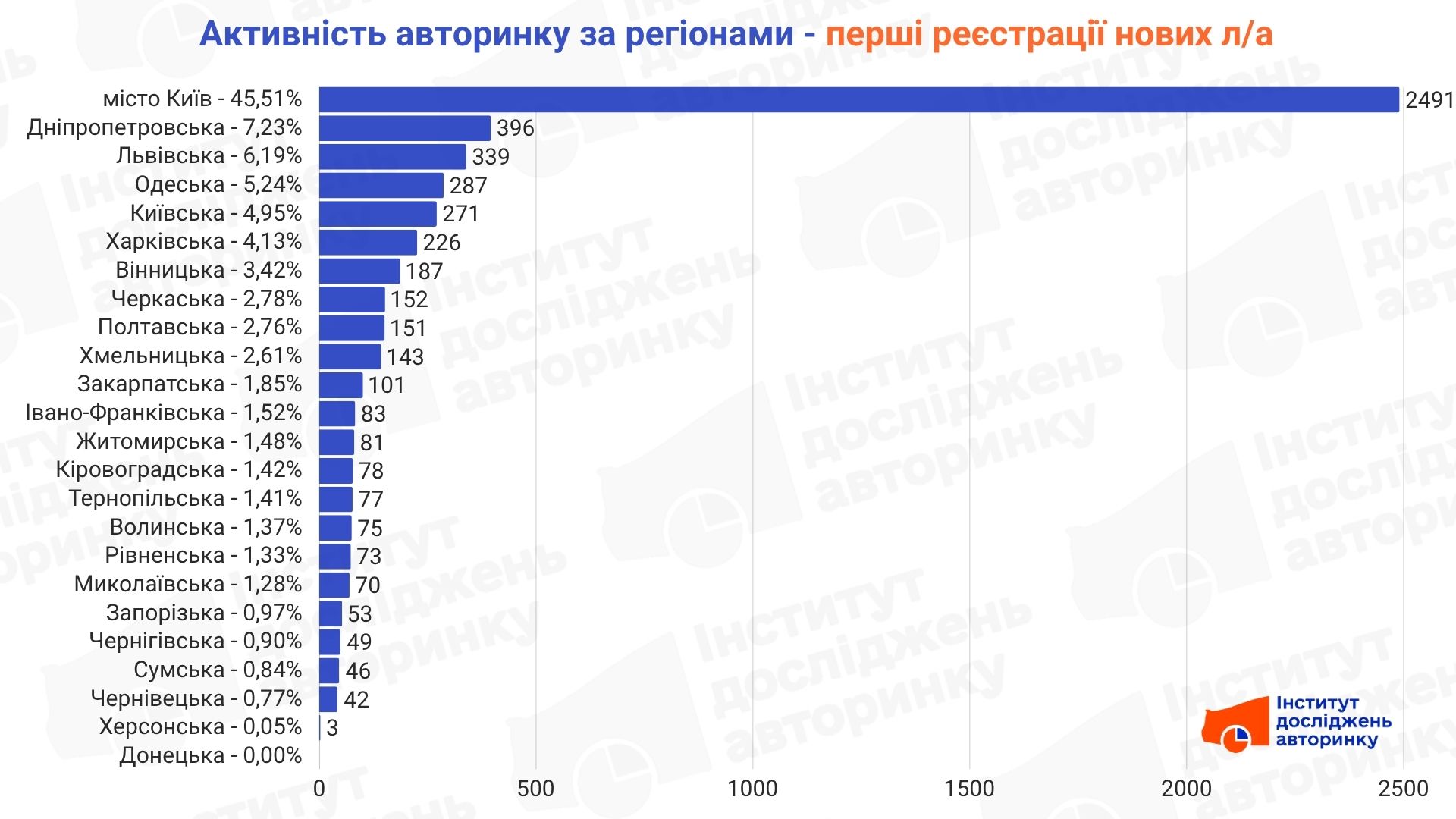
The remaining regions lag significantly behind: Dnipropetrovsk region (7.2%) and Lviv region (6.2%) close the top three, but their total volumes are three times smaller than those of the capital.
Brief conclusion
The March geography of the market confirms two key theses. First, the Action has finally changed the rules of the game on the domestic market, making geographical binding secondary. Second, Ukraine is clearly divided into "zones of interest": Kyiv is the market for new cars and status purchases, Lviv and the border regions are the logistical heart of imports, and Dnipro and Odessa are reliable pillars of the domestic circulation of equipment.
- Need more data — contact IDA!


