


The March statistics on the conversion of cars to run on liquefied petroleum gas (LPG) demonstrate a classic example of "inertial waiting". While the cost of gasoline and diesel fuel was setting new records, a significant part of car owners tried to find financial salvation in installing LPG. However, the dynamics of prices for the propane-butane mixture itself in April calls into question the feasibility of such investments.
Price swings: from "salvation" to trap
An analysis of average LPG prices in Ukraine over the past six months indicates a rapid loss of the main advantage of this type of fuel — low cost.
- November 2025 – January 2026: The price remained within 34–38 UAH/l, which maintained the economic attractiveness of the conversion.
- March 2026: The jump to 43 UAH/l was the first alarm signal.
- April 2026: Reaching the mark of 49 UAH/l effectively eliminated the difference in operating costs compared to gasoline.
With the current price of A-95 gasoline at 74 UAH/l, the gas price at 49–50 UAH/l makes HBO economically unprofitable (taking into account the 15–20% higher gas consumption and gasoline consumption for heating).
Dynamics of installations: a reflex of last hope
Statistics of official registrations of LPG in March ( 1,060 units ) show an increase compared to the disastrous February (631 units). This surge can be interpreted as a reaction to the increase in the price of gasoline and diesel, when car owners tried to "jump on the last train" of relatively cheap gas.
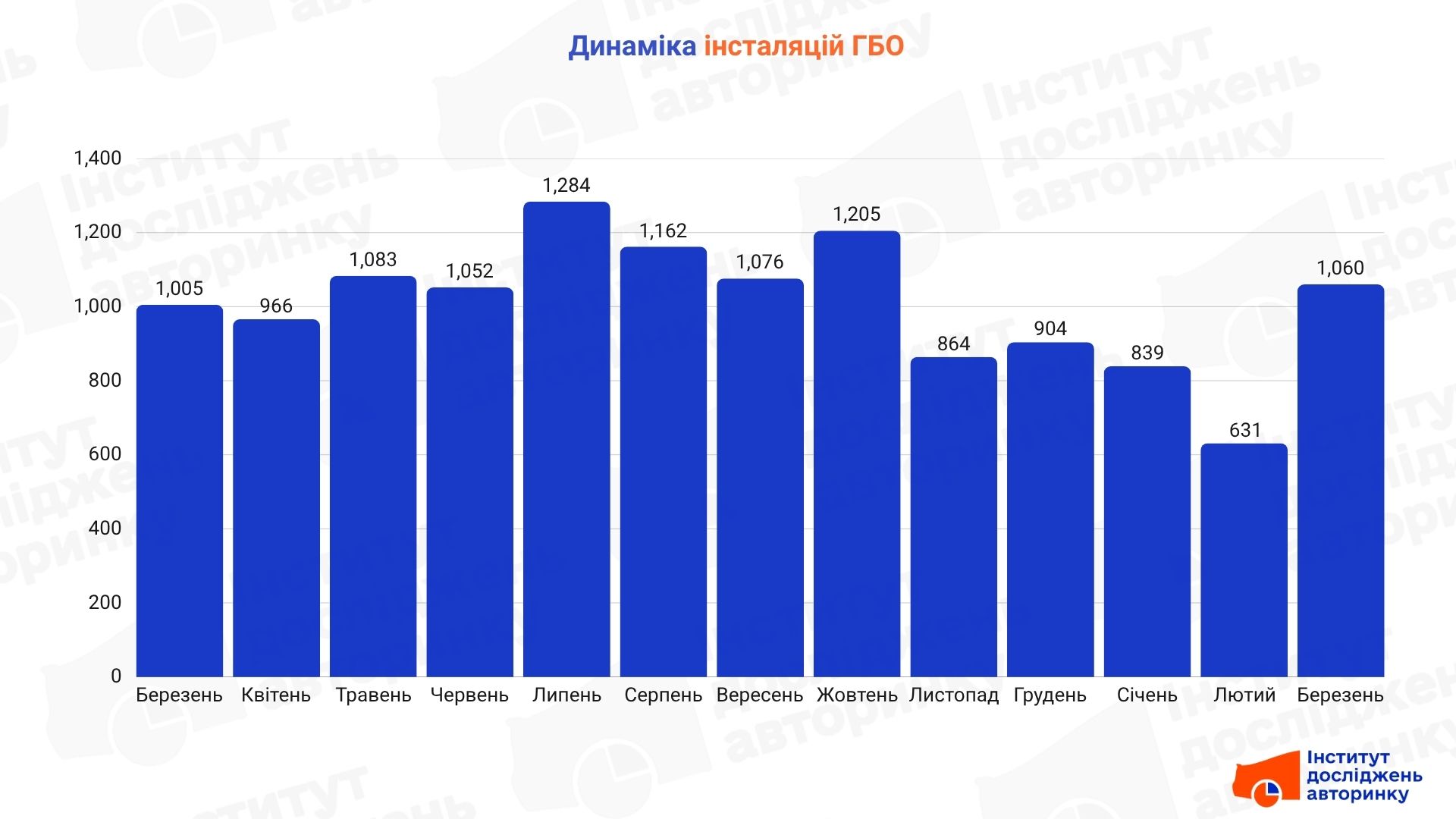
However, compared to the peak figures of last year (July — 1,284 units), the overall trend remains downward. The April figure of 966 units (forecast) and the further increase in gas prices above 50 UAH/l will likely lead to a collapse of the installation market in the second quarter of 2026.
Portrait of the car fleet: "Americans" and the old European "atmospheric"
The average age of vehicles retrofitted in the first quarter of 2026 is 16 years. This indicates that HBO remains a tool to maintain the viability of the old fleet, which has high fuel consumption rates.
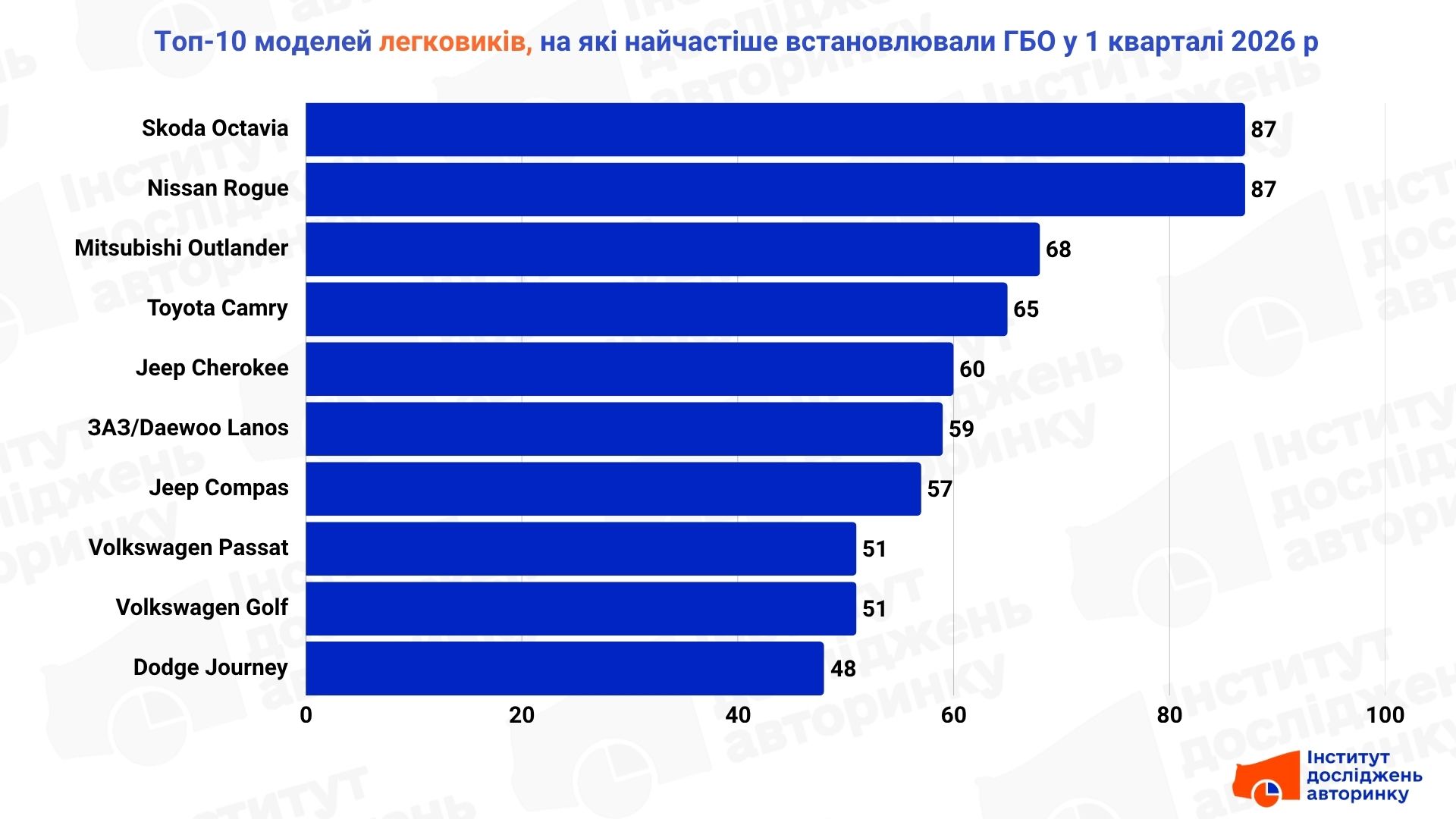
Structure of top models (Q1 2026):
- Large-capacity models from the US market: Nissan Rogue, Mitsubishi Outlander, Jeep Cherokee/Compass, Dodge Journey. These cars are mostly equipped with large-capacity engines, where installing LPG was previously the only way to make operation acceptable.
- European classics and mass market: Skoda Octavia, VW Passat/Golf, Daewoo Lanos. These are representatives of the segment with simple atmospheric engines, which are structurally well adapted to operate on gas, but due to their age, require minimizing operating costs.
Results and forecasts
- Economic impasse: With gas prices of 49–50 UAH/l, the cost of 100 km of driving on LPG exceeds similar figures for modern gasoline turbo engines and diesels.
- Technological washout: The LPG market was in what could be described as a “last gasp” at the beginning of 2026. The main reason was the loss of the two-fold difference in mileage between gas and gasoline, which had been the foundation of this segment for decades.
- Forecast: In the event of further growth in LPG prices or stabilization of gasoline prices, the conversion segment may shrink to minimal values, serving only a narrow niche of commercial vehicles and specific high-volume models.
Need more information — order it from IDA!


