


March bus registration statistics reflect a significant increase in activity compared to February. The most impressive dynamics was demonstrated by the segment of new imported vehicles, which grew by 307.7% MM. This indicates the implementation of large municipal or private contracts for the renewal of urban and suburban transport fleets.
- Check the history of buses by VIN code on CEBIA!
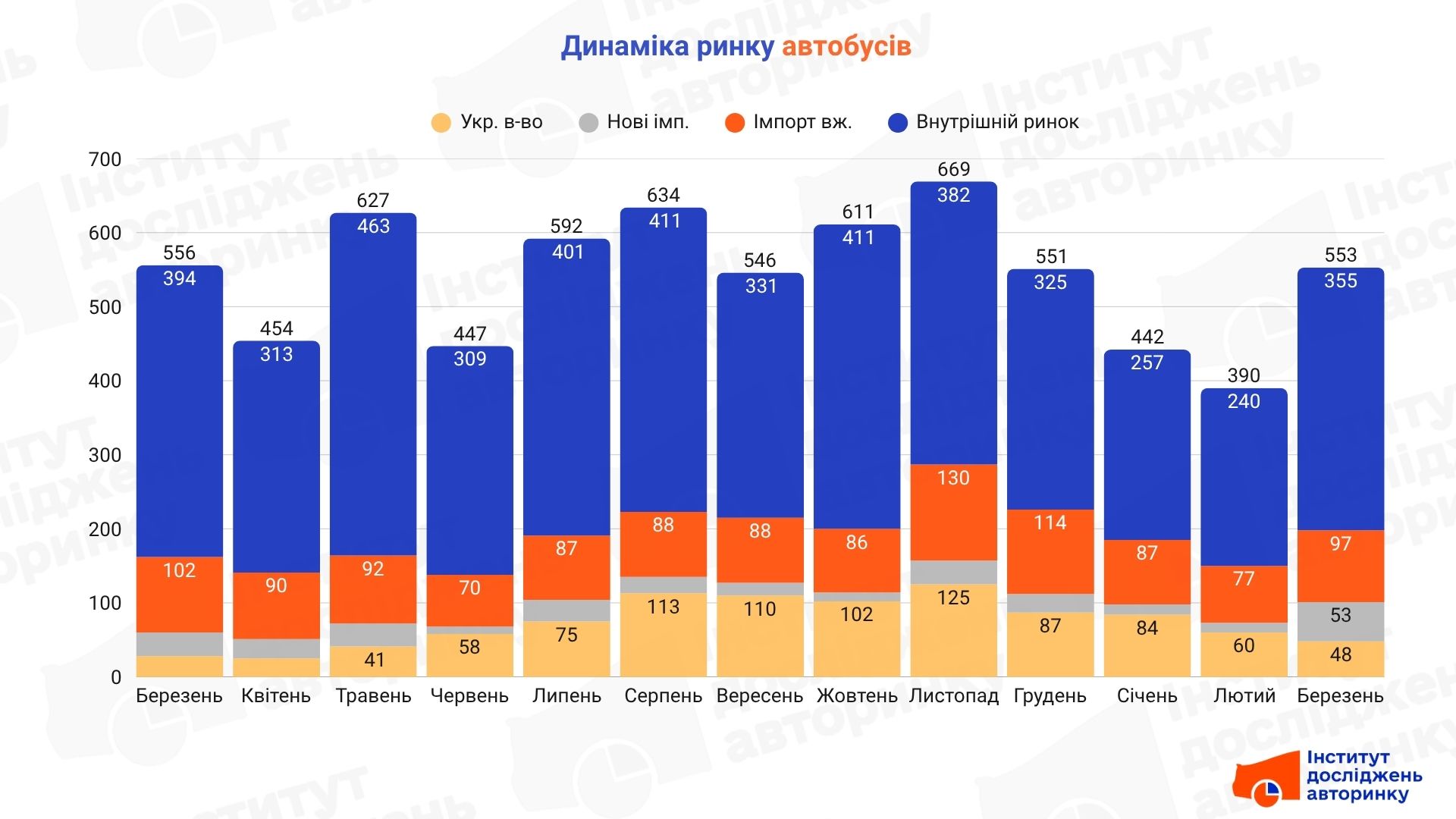
The Internal Market: Small Class Domination and the European Municipal Heritage
Domestic resales remain the main channel for equipment turnover ( 355 transactions ), showing a growth of 47.9% compared to February. However, in annual terms, the market still lags by 9.9%, which is a consequence of the high cost of operating outdated models.
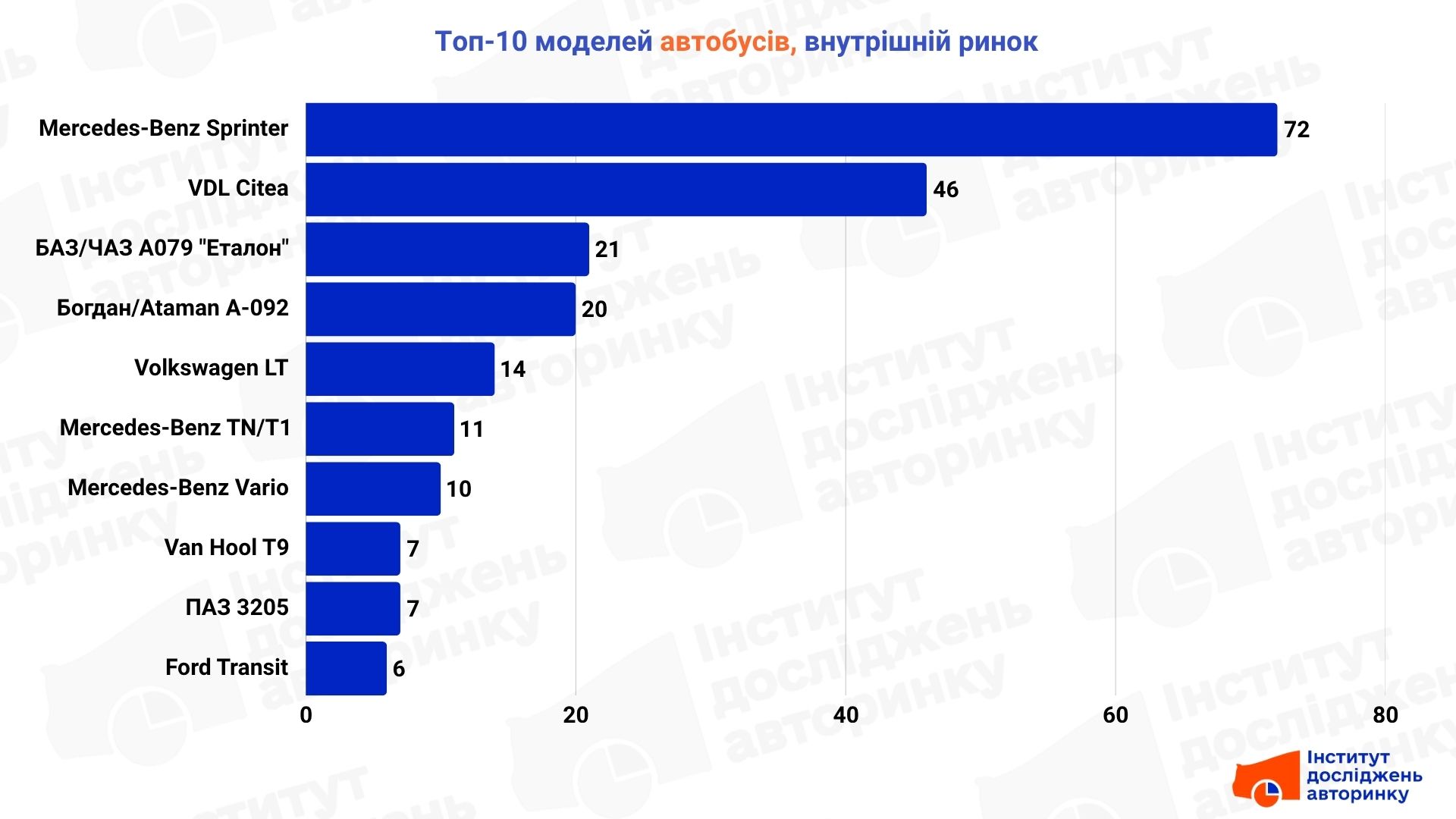
The leader in resales remains the Mercedes-Benz Sprinter, which has virtually monopolized the niche of suburban and intercity express transportation. The second position of the VDL Citea model is noteworthy — this indicates an active rotation of used European low-floor buses in the domestic market. Traditional models for Ukraine (Etalon, Bogdan) maintain their positions in the segment of school and budget suburban transportation. The presence of outdated models in the top (VW LT, MB T1) indicates the continued demand for budget solutions, despite their critically low energy efficiency in the current price environment.
Import of used vehicles: focus on Mercedes-Benz
The used bus import segment grew by 26% MM, stabilizing at 97 units. More than half of the top five registrations are products of the Daimler concern.
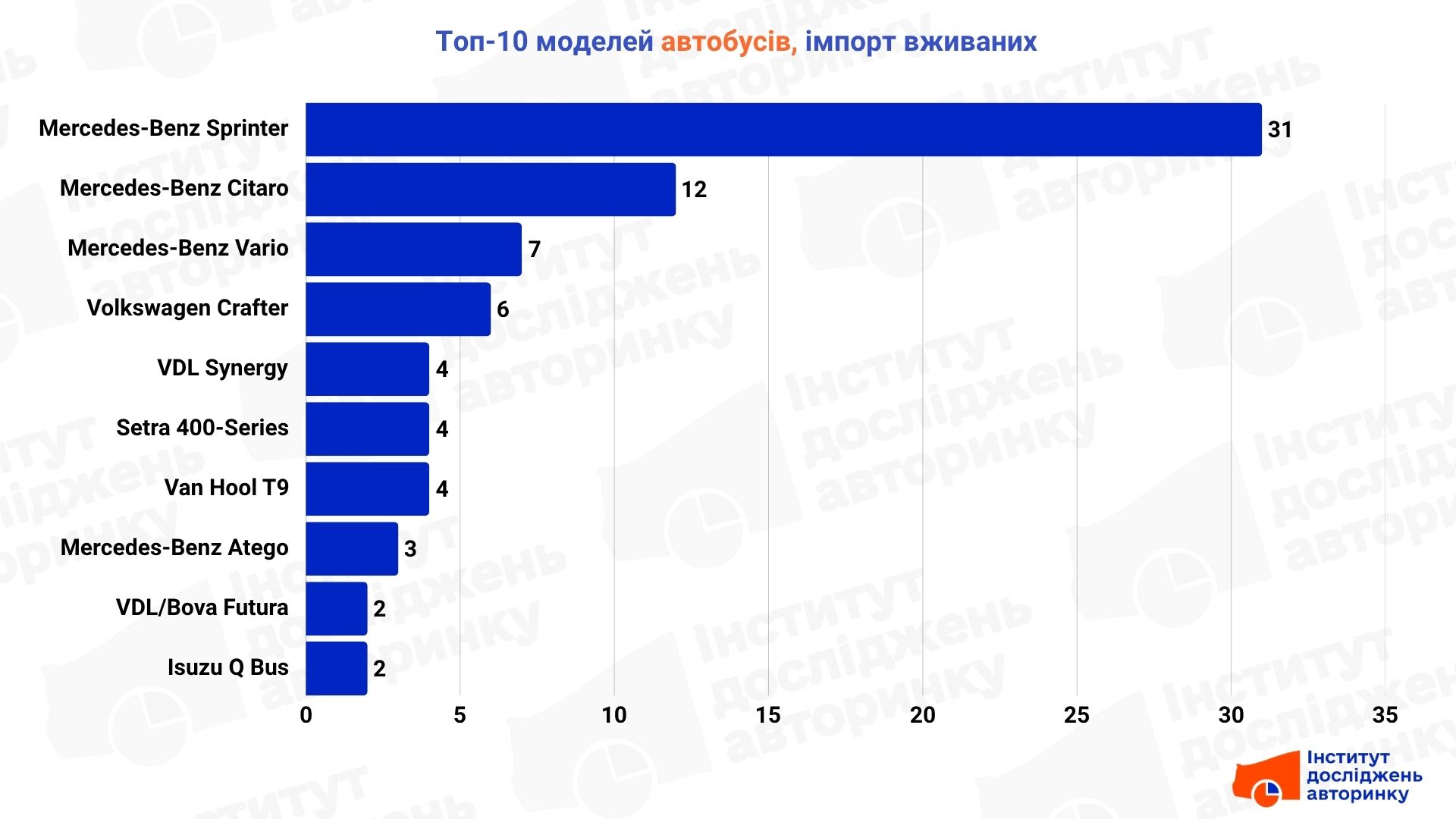
In addition to the constant leaders in the small class (Sprinter, Vario), importers are actively importing large city buses ( Mercedes-Benz Citaro ) and tourist liners ( Setra, Van Hool ). With diesel at 90 UAH/l, carriers prefer Euro-5 and Euro-6 standard equipment, which is a necessary condition for maintaining profitability on routes.
New Bus Market: Turkish Products and Domestic Platforms
In total, the market for new buses in March amounted to 101 units. The main trend was the growth in imports of new vehicles ( 53 units ), which for the first time in a long time exceeded domestic production volumes ( 48 units ).
The market leader is the Isuzu Citiport, which indicates the implementation of targeted programs for updating urban fleets. High positions are also occupied by the new Ford Transit, which is used as social and corporate transport.
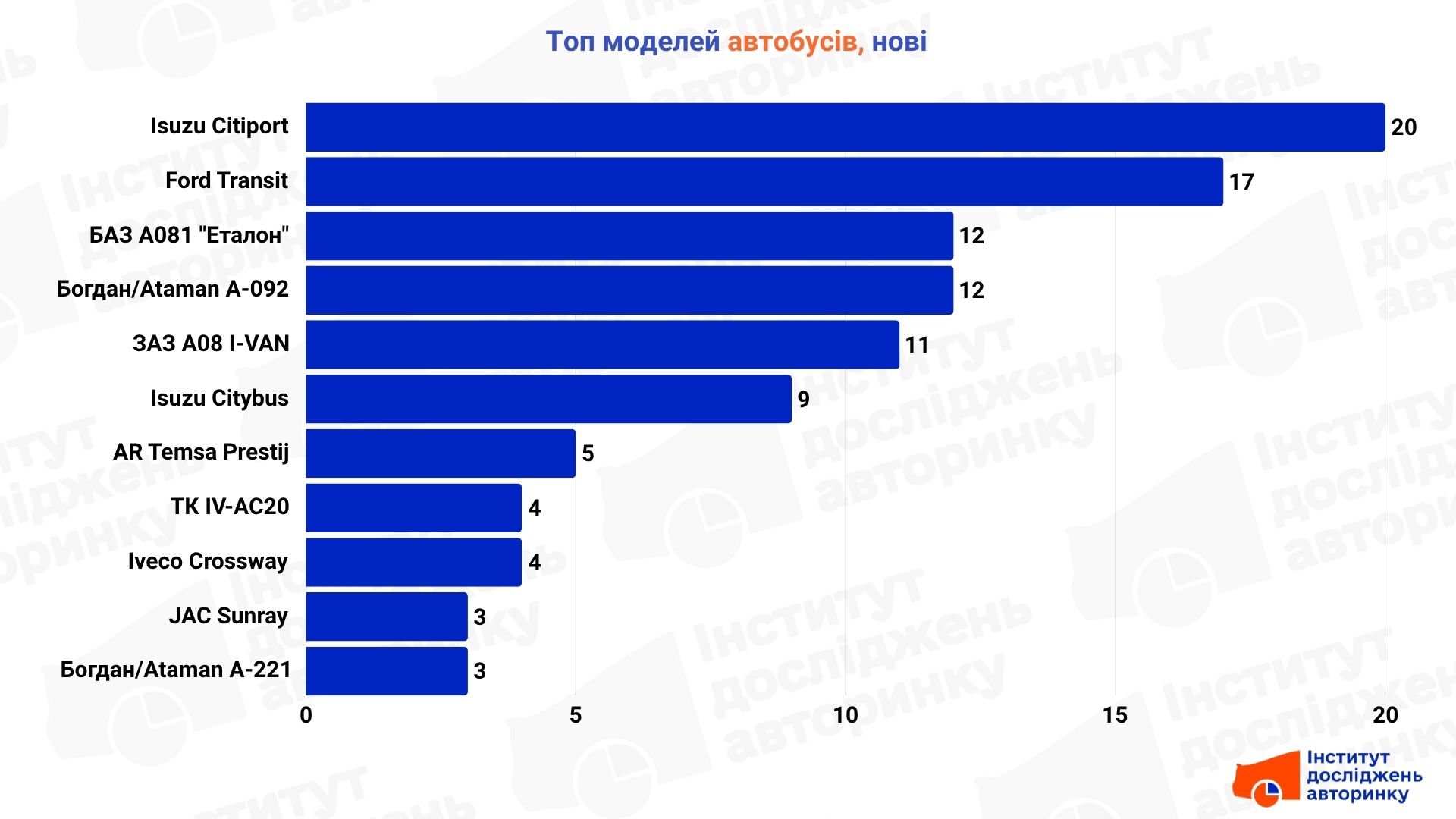
Domestic manufacturers (BAZ, Bogdan/Ataman, ZAZ) recorded a 20% decline in production in March compared to February. The bulk of the manufactured equipment is small-class suburban models, which are traditionally purchased with budget funds. The positive dynamics in annual terms ( +71.4% YY for the Ukrainian market) indicates a gradual recovery of the plantsʼ work after last yearʼs stagnation.
Results
- Fuel pressure. The price of diesel fuel (90 UAH/l) makes the operation of buses with high fuel consumption economically unpromising. This stimulates carriers to switch to more modern diesel engines or consider (at least at the idea level) Bus market dynamics (March 2025 — March 2026). Comparison of growth rates of new registrations and domestic resales. options for electrification in the urban cycle.
- Structural shift. The sharp increase in imports of new buses indicates the availability of investment capital in the large passenger transportation segment, where reliability and low unit costs per 1 km of mileage are important.
- Localization. Despite the monthly decline, Ukrainian plants remain key suppliers in the social and specialized transport segment.
Need more data? — Contact IDA!


